Build to print electromechanical assembly
Data Center Metalworks offers build to print electromechanical assembly for data center cooling and power OEMs. The scope may combine fabricated metal, purchased parts, harness work and box build. Send the current bill of materials, wiring documents and acceptance plan so our team can confirm the process and deliverable.
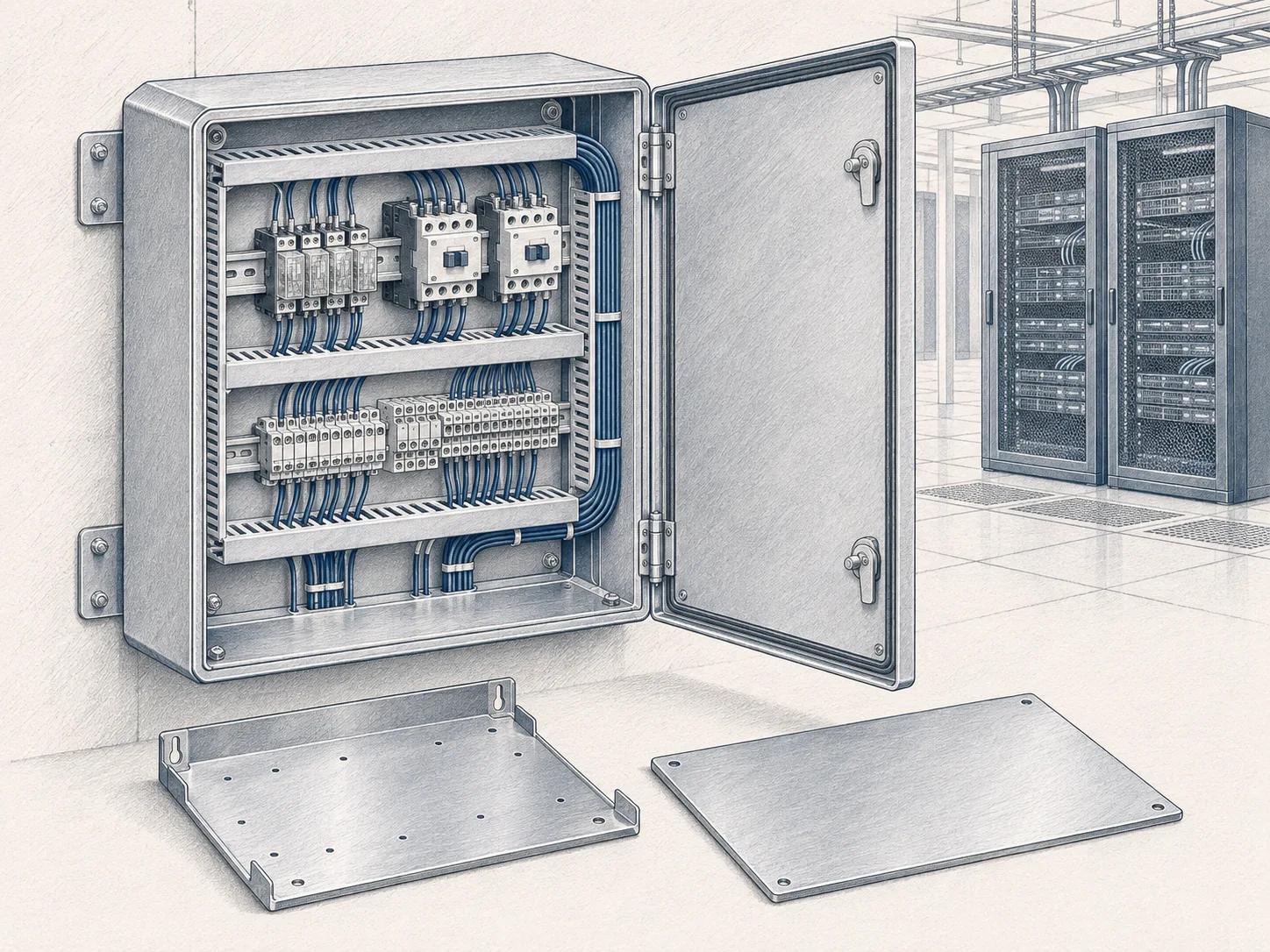
Start with the assembly definition
An assembly package should show how the mechanical and electrical parts work together. Send the part drawings, bill of materials and assembly instructions at the same revision. Include the purchased part numbers and any approved alternatives. A cabinet image or a loose list of components is not enough to define the build.
Mark the ownership of each part. Identify buyer supplied equipment, parts to be sourced and metal parts to be fabricated. State which items arrive tested and which need checks during assembly. If parts are supplied in stages, give the expected dates. The quote can then separate the assembly work from any unresolved sourcing or fabrication tasks.
Harness and wiring scope
For harness work, provide the wire schedule, conductor details, connector part numbers and pin assignments. Show the required labels, routing and finished lengths. Identify terminals, seals, boots and strain relief parts by exact reference. Include any allowed substitutes in the controlled document set. A matching wire color does not prove a correct circuit.
Tell us what checks are required and who accepts the results. The test procedure should define continuity, polarity and any other required electrical checks. The equipment designer sets the limits. Confirm the tools, records and test fixture needed for the job before the build is released. Harness standards and specialized test capabilities remain subject to review.
Box build and mechanical integration
Box build may include a fabricated enclosure, mounting plate, devices, wiring and labels. Show the mounting locations and the access needed for wiring and service. Identify any parts that must be installed before the enclosure is closed. Include hardware, torque requirements and the order of assembly where the design depends on it.
The mechanical drawing should also show ground points and paint masking areas. Include cable entry details and the approved strain relief arrangement. If a door has wired controls, show the cable route through its full travel. Each interface belongs in the build package so the result can be checked against a defined design.
Purchased components remain specification first
Industrial component supply can be included alongside the fabricated assembly. The stocked components page lists catalog parts using DCM identifiers and separate manufacturer references. A catalog row does not mean a component is approved for your assembly. Match the manufacturer, model, ratings, configuration and required approvals before it enters the accepted bill of materials.
For relays and contactors, include the coil voltage, contact arrangement and duty requirements. For fuses, specify the exact class and electrical ratings. For soft starters, confirm the motor and operating duty. A soft starter is not a VFD replacement. Parts that look similar can differ in ways that matter to the completed equipment.
Testing and release records
A good test scope names the action, the limit and the record. State which checks apply to each unit and which belong to a first article. Identify the approved test procedure and its revision. Explain how a failed check should be recorded and who may approve rework. The agreed process should be visible in the quote.
A finished electrical assembly may need a separate listing or approval. No UL 508A shop qualification is claimed here. If your program needs one, specify the requirement and its owner before sourcing starts. A manufacturing quality certificate does not replace an electrical product approval or prove the completed assembly is suitable for the installation.
Join metalwork and components to 1 revision
An assembly package should connect the metal drawings, wiring details and purchased parts to the same revision. Identify the interfaces before fabrication begins. A bracket, harness or terminal can change the way the complete box is built and checked. The accepted scope should define the assembly sequence, required tests and records needed for the buyer to review the finished work.
Electromechanical assembly is part of our Florida process list, alongside sheet metal, welding and machining. The scope can connect a fabricated enclosure or mounting plate with specified components and harness work. Rich reviews the bill of materials and instructions to establish the included operations. Purchased parts, test equipment needs and customer supplied items must be identified before the assembly schedule is agreed.
Put acceptance requirements in the quote
The assembly acceptance plan should cover both mechanical fit and electrical checks within the agreed scope. Define the wiring tests, labeling review and component identification needed for release. Specify any required product listing and who is responsible for it. A successfully completed shop check does not replace an approval required for installation or operation of the complete equipment.
Define the records needed to release the box build or harness assembly. These can include component identity, connection checks and the results of specified tests. Keep the approved bill of materials available for comparison. If fabrication in the scope requires powder coat or AWS D1.1 welder qualification, ask us to confirm those items. Neither is an established claim on this site.
Start with a drawing package
Use the RFQ form to send your electromechanical assembly requirement. Include the company, contact name, email, plant location, quantity and target date. Attach a PDF, DXF or STEP file up to 25 MB. A dimensioned PDF should identify the current revision and the features that control fit. Add the material grade, thickness, finish and any inspection or packing notes.
Identify whether the request covers a first assembly, a production lot or repeat releases. List customer supplied components and their available dates, along with the person who can approve wiring or BOM questions. Kevin Leonard handles the account, and Rich Fitzgerald reviews production and sourcing. The accepted quote must establish the assembly scope, required tests and schedule before the work is released.
BUYER QUESTIONS
Details worth asking about.
Start with the specification. Confirm the details in your written quote.
Can you fabricate the metal and assemble the parts?
That combined scope can be reviewed from the same drawing and bill of materials package. Rich confirms the plant, sourcing, fabrication and test steps. The quote identifies the exact work included, plus any finish or approval items still requiring confirmation.
Do you build wiring harnesses?
Harness work is considered as part of a defined build to print assembly scope. Send the wiring schedule, connector references, lengths, labels and test requirements. The specific tools, process and acceptance records must be confirmed for the program.
Can you substitute a stocked component?
Only with the buyer approved specification and a documented review of the proposed part. A brand name, similar appearance or higher rating is not enough to establish equivalence. The accepted bill of materials must identify what will actually be installed.
Will the assembly arrive tested?
The quote must state the test procedure and records included. Send the required checks and acceptance limits with the RFQ. We do not imply a complete system validation when only mechanical assembly or a limited electrical check has been ordered.
NEXT STEP / YOUR DRAWING
A part number.
A print. A starting point.
Send the drawing, quantity and target date. Kevin handles your account. Rich reviews production and sourcing.
Request a quote